top of page

Articles by Dr. Limor Leibovitz

In the Articles section of the Creativity in Education website, I, Dr. Limor Leibovitz – an expert in education, creativity, and artificial intelligence with 30 years of experience in teaching, innovation, and educational entrepreneurship – share insights, research, and practical scenarios.

The articles address the major questions of our time: how GenAI is transforming education, organizational learning, and the job market, and how we can prepare for the future while preserving human values.

My writing is grounded in applied research, in professional development programs for teachers using a unique futures-thinking and entrepreneurship approach, and in extensive experience leading innovative educational initiatives.

Here you can read about the AI in the Classroom course that trained teachers in innovation and entrepreneurship, explore scenarios of adaptive organizational learning in the GenAI era, and discover the holistic model I developed in my book The AI Generation – Educating Children in a World of Artificial Intelligence. The book addresses the challenges of synthetic media, interpersonal relationships, resilience, and equal opportunity.

Each article opens a gateway to understanding our shifting reality and to developing personal and organizational resilience, creativity, and critical thinking in the age of artificial intelligence.

ספר דור ה-ai

להיות אנטי שביר בעידן הבינה המלאכותית

גוגיה- החינוך שמעבר לפינה -רשת אמי״ת

מול קצב שינויים מהיר וחד יותר מאי פעם, חשוב לאמץ חוסן נפשי שיאפשר התמודדות טובה יותר עם האתגרים שהטכנולוגיה מציבה לפתחנו. גישת אינטי-שביר תסייע לא רק לצלוח את הזעזוים ולשרוד אותם, אלא אף להתחזק ולצמוח מהם. זאת בעזרת הערכים שממשיכים להוביל אותנו למרות הכל
שילוב בינה מלאכותית

עיצוב אוניברסלי ללמידה ולבינה מלאכותית בכיתה

עלון ״מֵעֵבֶר לבינה" בינה מלאכותית בחינוך

גישת UDL נותנת לנו מסגרת לחשוב מחדש על הדרך שבה תלמידים קולטים ומעבדים מידע, מבטאים את עצמם ומתחברים רגשית לתהליך הלמידה. הבינה המלאכותית מאפשר להגדיר מאד את החזון שמאחוריה ולממש אותה הלכה למעשה.
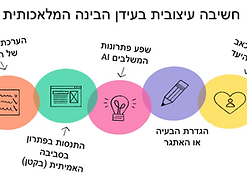
חשיבה עיצובית בפיתוח המקצועי

Artificial Intelligence in Education: Professional Development through Design Thinking

Chais Conference 2025 – Research on Innovation and Learning Technologies

This article examines the impact of an entrepreneurial approach to teacher professional development on educators’ competencies in the field of artificial intelligence. A total of 150 educators from diverse roles, sectors, and age groups participated in the study after completing a hybrid online course (synchronous and asynchronous) in groups of up to 25 teachers. The central hypothesis was that an entrepreneurial approach, grounded in design thinking methodology, would enable teachers to act as entrepreneurs and address educational challenges that affect their students while experimenting with AI tools. The projects that teachers developed to solve concrete problems in their school contexts were analyzed using a holistic model that emphasizes values, guiding principles, and competencies relevant to the current era. The research methodology combined qualitative thematic content analysis with a survey based on UNESCO’s conceptual framework for teachers’ AI competencies. The findings indicate that participants perceived the course as practical and relevant to their needs. Their self-efficacy in using AI tools increased during the course, with many reporting a positive shift in their attitude toward technology. However, the teachers’ projects focused mainly on current learning difficulties rather than anticipated challenges—such as the growing need to foster critical thinking or to develop social and emotional skills in response to the expanding use of AI in society. The article suggests broadening teacher training to include social and ethical challenges associated with AI, thereby ensuring that educators are prepared to address the technological impacts on the education system.
לימור ליבוביץ ושי גרשון

What will organizational learning look like in the age of artificial intelligence?

The Israel Information Technology Bureau

At the Bureau’s Center of Excellence for Learning Technologies, we focus primarily on asking questions and exploring how learning will look in an era where everything we once knew is being disrupted, giving rise to something entirely new. This process is called disruptive innovation. The term was coined by Professor Clayton Christensen and refers to a process in which new technologies, products, or services challenge existing models, leading to the creation of new ones — until the new category becomes dominant, pushing aside and replacing the traditional one. Dr. Limor Leibovitz writes precisely about this in a fascinating article that offers us a small leap into the future of learning in the age of artificial intelligence. Are you ready for an era where AI transforms organizational learning? Discover how advanced technologies and futures thinking can lead your organization to thrive in the GenAI age.

Did you read one of my articles and want to share your thoughts?

I’d love to hear from you.
Write to me, and I’ll get back to you!

bottom of page